Veggie vitamin D3 maker explores novel production process to secure future supplies
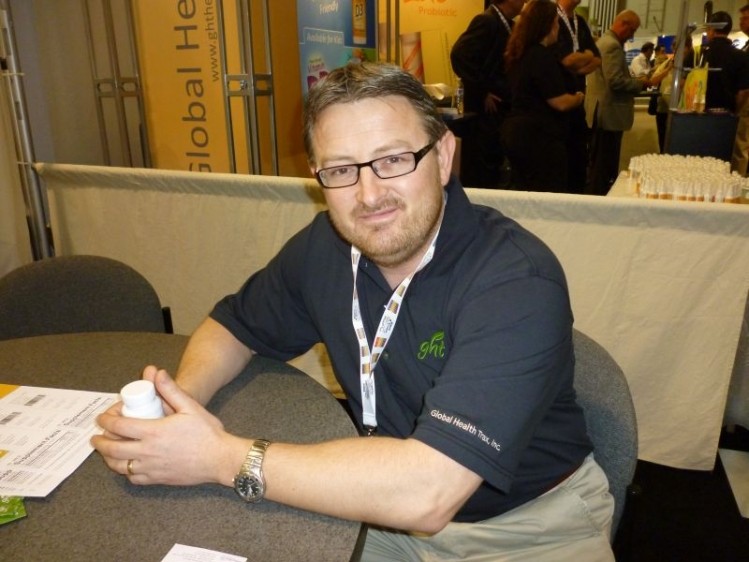
Mark Broughton is a director at ESB Developments, which recently struck a deal to supply its Vitashine 100% vegan and vegetarian vitamin D3 (from lichen) to Global Health Trax (GHT) for use in supplements and other products in the US, Canada and other selected markets.
Wild harvesting process
The D3 is currently wild harvested from lichen that grows on rocks, trees and other locations in North America, Asia and Scandinavia, Broughton told NutraIngredients-USA at the EngredeaExpo West show in Anaheim.
It is collected in buckets and washed at source, and then put through a multi-step process of extraction (using ethanol), purification and concentration in the UK before it is added to a vegetable oil carrier (medium chain triglycerides). It is then shipped over to GHT in canisters to be made into finished products (sprays, softgels etc).
“We’d like to use super critical C02 extraction but we don’t have the money at this stage,” said Broughton.
Longer term we would like to be able to grow it in-house
He added: “The lichen species we use to extract cholecalciferol (D3) is pretty ubiquitous, and we reckon we can do at least 500 million 1000 IU (International Unit) doses a year. But longer term we would like to be able to grow it in-house.
“The lichen is actually a combination of a fungus and an algae, so we could grow it in big vats and feed it with simple sugars. We wouldn’t need more than one vessel because the volumes needed are actually very small.
“We will probably need two or three years to work out the speed of growth and how to maximize yields, and there is also a funding issue. But that’s the longer term plan.”
Currently Vitashine can be put into sprays and capsules, but Broughton is also working on developing microencapsulated powders to broaden its application areas, he said.
“The powders should be ready by the middle part of this year, so we should be able to add Vitashine to a wider variety of food products.”
Patent protection
Broughton’s firm has applied for patent protection for the extraction and concentration process and is also looking to protect any in-house growing process, he said.
Why veggie D3?
Most plant-derived vitamin D is vitamin D2. However, the evidence suggested D3 – which is currently sourced from lanolin (the pale-yellow oil found in sheep's wool) – was better utilized by the body, he said.
“We researched a lot of candidate plant materials – lichen, mosses, mushrooms and so on- to see which contained cholecalciferol and we came across a species of lichen that allows us to get virtually the same concentration as from lanolin.”
The reaction to the product at the show in Anaheim has been “incredibly positive”, said Broughton, who works closely with the vegan and vegetarian community in the UK.
“There is a real demand from vegans and vegetarians, but many other people are also surprised to find that vitamin D3 comes from lanolin or other animal sources and would rather get it from a plant source as well,” he said.
“They are also worried about sheep dip and undesirable compounds getting into lanolin-derived D3."
As for cost, he added: “Lichen-sourced D3 is more expensive than lanolin-source vitamin D3, but not massively so. On a cost in use basis, you use so little that it is very competitive.”
Good timing
The timing of the launch in the US was very good, he admitted.“There has been a huge amount of science published in this area and consumer awareness of the need for vitamin D is rising all the time.”
Vitashine is the only Vitamin D3 product registered worldwide with the UK-based Vegetarian Society and Vegan Society.
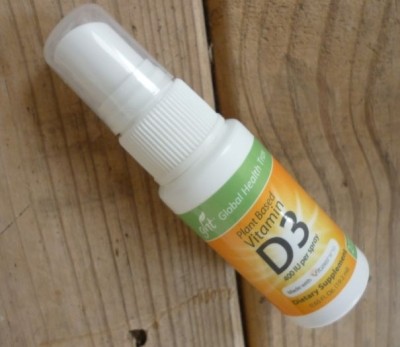
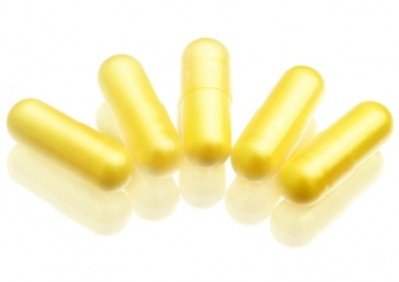
GHT’s plant based Vitamin D3 finished product line is available in spray and capsule form. The spray can be applied on food or sprayed directly into the mouth.
GHT is also making these products available to customers as a private-label offering through its subsidiary, Health Specialties Manufacturing.
The sunshine vitamin
Vitamin D refers to two biologically inactive precursors - D3, also known as cholecalciferol, and D2, also known as ergocalciferol. Both D3 and D2 precursors are transformed in the liver and kidneys into 25- hydroxyvitamin D (25(OH)D), the non-active 'storage' form, and 1,25-dihydroxyvitamin D (1,25(OH)2D), the biologically active form that is tightly controlled by the body.
While our bodies manufacture vitamin D on exposure to sunshine, the levels in some northern countries are so weak during the winter months that our body makes no vitamin D at all, meaning that dietary supplements and fortified foods are seen by many as the best way to boost intakes of vitamin D