One industry observer said with some retailers refusing to sell products containing 1.3-dimethylpentylamine, other unauthorized herbal extracts and their synthetic cousins are gaining prominence with unscrupulous supplement makers.
These include Salvinorin A (derived from from Salvia divinorum), mitragynine (from Mitragyna speciosa) and nuciferin. All tend to end in weight loss products or those aimed at the body building market. They are also used in 'herbal high' products.
Industry members are especially concerned that consumption of these potent stimulants may lead to serious injury or death as was the case with ephedra before it was banned by the FDA under the 1994 Dietary Supplements and Health Education Act (DSHEA) in 2003.
“Retailers seem to be clamping down on 1.3-dimethylpentylamine ,” said one industry observer. “As a result everyone is desperately seeking the next 'jack me up' compound as the replacement.”
Despite that observation major retailers like GNC continue to freely sell products containing the ingredient, although it can be difficult to determine if they are geranium extracts or synthetically derived.
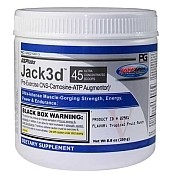
One product, called Jack3d, lists an ingredient called ‘13-Dimethylamylamine (Geranium [Stem])’ on the product’s webpage that also makes the claim: “This product produces an intense sensation of drive, focus, energy, motivation & awareness. In addition, it allows for rapid increases in strength, speed, power & endurance.”
That link can be found here.
A GNC spokesperson said product enquiries should be directed at the manufacturer, USP Labs, but that company was unavailable for comment at the time of publication.
USP Labs’ own website page for Jack3d – found here – contained a disclaimer that references the ingredient's banned status with some sporting organizations : “…compounds such as caffeine, creatine & 1,3 dimethylamylamine (also known as methylhexanamine, 2-amino-4-methylhexane & 1,3-dimethylpentylamine – a natural constituent of the geranium flower) may not be allowed by your specific sports organization. It’s completely up to the user to get this and any dietary supplement cleared by their organization before using.”
Further information adds: “Geranium has a long history of being used for many purposes in the food supply. It contains a constituent that may provide a boost to your workouts & help you power through tough set after tough set – always ready to take on the next challenge.”
Increasing concern
Commenting on the subject of economically motivated adulteration (EMA), Mark Blumenthal, the founder and executive director of the American Botanical Council (ABC), said: “There is increasing concern by some experts that there is significant intentional adulteration – not just contamination – usually inintentional – of numerous dietary ingredients for a variety of economic motivations.”
He said the ABC was working with the American Herbal Pharmacopoeia to produce a ‘Botanical Adulterants White Paper’ that will, “list known adulterants and analytical methods to detect them, in the hope of reducing some of this kind of fraud.”
It was expected to be published in the Summer or Fall.
Blumenthal noted that Salvinorin A is, “a traditional psychoactive plant which has become quite popular and controversial.”
A little after publication of this story, the GNC spokesperson added: "GNC strictly complies with all applicable statutes and regulations, and requires its vendors to represent and warrant that the products they sell do as well."


9 comments (Comments are now closed)
The ongoing issue
Paul & Jen & others,
I have been following this ongoing debate with interest. Having just returned from ExpoWest/Supply Expo in Anaheim, I can confirm that many responsible people involved in this industry are taking the MHA/1,3-dimethylpentylamine issue incredibly seriously. There is a growing level of concern. You need only listen to these highly credible sources:
1. Anthony Almada, President and CEO of GENr8, Inc.
http://www.nutraingredients-usa.com/Research/Geranium-oil-issues-beginning-to-bubble-over-into-public-domain
2. Ed Wyszumiala, General manager of Dietary supplements Programs for NSF International
http://www.nutraingredients-usa.com/Industry/NSF-MHA-not-a-constituent-of-geranium-oil
Ed is not the source associated with Shane's article and I support his source's request for anonimity at this point.
Paul, you talk about 'vague rumors': I think the two interviews above show the potential seriousness of the issue, which is only now becoming apparent. More and more people are looking into this, and we will - as credible journalists - continue to follow this issue as it unfolds.
Stephen Daniells
Senior Editor
NutraIngredients-USA.com
Report abuse
Posted by Stephen Daniells
19 March 2011 | 17h47
Sources
Shane,
So in essence what you're telling me is this; you're a credible journalist, you've worked in the industry for years and you know these insiders. I'm therefore expected to suppress any skeptical instincts I may have (such as
the industry's possible self-serving interests) and accept your word as gospel.
Except that you've demonstrated absolutely zero willingness to perform any real "journalism" here; in reality, you've done nothing more than uncritically pass along the opinions and judgments of others.
For example, take this statement...
"One industry observer said with some retailers refusing to sell products containing
1.3-dimethylpentylamine..."
The logical question would be, "which retailers?"
GNC continues to sell them. As does online mega-retailer BodyBuilding.com. I personally
do not know of any major retailers who've refused to stock products containing 1,3-dimethylpentylamine.
In my experience, retailers don't stop selling extremely popular, high margin products when they have no incentive to do so.
So which ones?
Your article claims, "unauthorized herbal extracts and their synthetic cousins are gaining prominence with unscrupulous supplement makers."
For the moment, I'll concede your point about the need for anonymity. But uncritical acceptance is another matter. Your third party tester should be able to make a positive claim to these ingredients' presence in tested supplements. "Gaining prominence?" Can you get any more ambiguous than that?"
And later you state, in regards to these illegal ingredients...
"All tend to end in weight loss products or those aimed at the body building market."
"Tend?"
That's journalism?
You challenge both myself and Skip Tolliver on the grounds that there is no NDI for "synthetic geranium extracts", yet you haven't revealed whether or not your anonymous tester was able to determine a synthetic version was used in the products allegedly tested.
And for the record, I never said 1,3-dimethylpentylamine was "authorized." What I said was that it was "not illegal." Considering such products have been openly advertised and sold since 2006 and never been subject to any enforcement action - and you have provided no evidence synthetic DMAA is being used - it's reasonable to assume that 1,3-dimethylpentylamine
remains DSHEA complaint.
Regarding your comment to me...
""We would be interested to know more about your contaminants and GMP testing procedures, that could even form the basis of a story that may go some way to refuting some of the allegations given air in this story."
Shane, as you well know (I'm sure you actually performed some "journalism" and looked us up) we're not in the business of verifying the presence/absence of adulterants or the analyzing whether the amounts of various ingredients meet label claims... there are other organizations that do this, and do it well (Consumer Labs, for example). Rather, UltimateFatBurner.com does something that the industry definitely does NOT do - engage in direct consumer outreach and help readers evaluate (often confusing) ingredients & marketing claims for branded products. As such we look to (what ought to be) reliable industry sources such as Nutraingredients-usa.com for factual information that we can pass on to our readers.
And, since the subject concerns weight loss and bodybuilding supplements (our main niche), it's extremely frustrating to be reading "vague rumors" being passed on under the guise of serious journalism.
All the best,
Paul Crane
Webmaster/Author
UltimateFatBurner.com
Report abuse
Posted by Paul Crane
18 March 2011 | 20h15
Sources
Dear Paul,
You write, "In other words, unsubstantiated comments like yours lack credibility" because in this story I don't name the source of my information.
Ideally a journalist will always name his sources, but in some circumstances, he/she cannot for varying reasons, at which point he/she must make make a judgment call, along with his/her colleagues, about whether the information can be trusted, and what purpose will be served by publishing it.
I have been writing about the US supplements market for more than 10 years and know many people working in the industry, from suppliers to manufacturers.
In this case the source was neither, but a third party product tester that alerted us about these substances after conducting unofficial testing of spiked DS products.
As I said in a previous response to Jen, the industry is concerned about this activity, as any responsible industry would be about the potential for injury or harm from the use of non-authorized substances, not to mention the public image problem that could spring from such events, if and when such stories reach the mainstream press, which, I will add, we are not.
Equally, it is heartening to know that you are raising few of these red flags in your role as webmaster at www.UltimateFatBurner.com. We would be interested to know more about your contaminants and GMP testing procedures, that could even form the basis of a story that may go some way to refuting some of the allegations given air in this story.
Finally, in regard to synthetic geranium extracts like 1-3 Dimethylamine, on what grounds do you base your statement that it is authorized? For the life of me, I can't find an NDI/ODI for it, although it must be said the FDA has as yet neither confirmed or denied whether one exists.
Yours Faithfully,
Shane Starling
NutraIngredients-USA.com
Report abuse
Posted by Shane Starling
09 March 2011 | 18h33
Crap Jouranlism
Shane,
Just for the record, I'm the webmaster of www.UltimateFatBurner.com, and we perform science based reviews on sports and weight loss supplements. While DMAA (or 1-3 Dimethylamine) is becoming more and more prominent in supplements (but is not currently illegal) the other supplements you mention are not.
In your response to Jen, you indicated "trusted industry insiders" had informed you these other ingredients were commonly used "off label."
Yet you don't name these sources, or exactly how they came to be in possession of such information. They're not government agencies obviously, as the FTC and FDA often yank supplements contaminated with illegal pharmaceuticals (which, for the record, are what you are going to put into your supplements illegally if you want them to "work" and have no concern for ethics or the law - not mitragynine or nuciferin).
In other words, unsubstantiated comments like yours lack credibility; you either name your sources, so your readers can judge the credibility of the "industry insiders", or Jen's words ring true; this is a poorly-researched, inflammatory piece written to inflame the element of your audience that doesn't know any better.
Report abuse
Posted by Paul
09 March 2011 | 17h51
Journalism
Dear Jen,
This story highlighted some non-authorized substances that are being utilized in supplement products of various kinds. The information I had came from trusted industry sources who said the substances, while most commonly known as 'herbal highs', were also being used in supplement products as appetite suppressants, often without mention on-label.
You're right that it would be easy to highlight any number of substances from those that are being sold on the herbal high black market, but this is not the kind of journalism NutraIngredients-USA.com practises.
The fact is there a lot of people in the dietary supplements industry that are concerned about the presence of these substances in products that are being freely bought on the internet and other places, which are not authorized, and for which safety has not been proven.
It was the intention of the piece to highlight some of these concerns.
To Mr Tolliver,
It is our understanding that under DSHEA any synthetic equivalent of a botanical substance not on the market before 1994 requires a New Dietary Ingredient (NDI) authorization from the Food and Drug Administration (FDA).
To our knowledge no synthetic version of a geranium extract has earned an NDI authorization.
FDA recently affirmed this position when it said a synthetic version of an algae extract called homotaurine was not substantially equivalent to the extract itself.
But if you possess information to the contrary we'd like to see it!
Best regards,
Shane Starling
NutraIngredients-USA.com
Report abuse
Posted by Shane Starling
08 March 2011 | 11h55
Crap journalism
There is not a single product on the market that utilizes Salvinorin A for weight loss or body building. Nor is there a single product on the market that utilizes mitragyna for this purpose. These claims are simply absurd and really shows the lack of knowledge that Shane has in his subject matter. Shane, why don't you just name all of the herbal drugs you have read about in the newspaper and name them in this crappy piece of poorly researched journalism? Idiot.
Report abuse
Posted by Jen
03 March 2011 | 21h32
Geranamine
IF the geranamine content (geranium oil is used in cooking) of geranium oil is chemically verified, then the usage of either the extract or synthetic equivalent is protected by DSHEA.
Do you think that the Vitamin C you ingest every day is extracted from something? No, DSHEA protects synthetic equivalents a chemically identical.
Report abuse
Posted by Skip Tolliver
24 February 2011 | 22h26
Industry self-regulation
Industry self-regulation is only good so long as people respect everyone's natural rights. This article flies directly in the face of our nation's treasured Lockean foundations. Not only is the use of 1,3 Dimethylamylamine not unauthorized, the claim that only fringe companies use it is unnecessarily insulting.
Instead of trying to ban products, a better option is two create a two tier system. The first tier would subject all products to strident oversight, while the second tier would be free-market. As a consumer, I would likely opt for the latter. Other people, more cautious in their outlook, may choose to opt for the former.
Why does the author not call for such a sensible approach? Why does the author not take the time to consider the natural rights of others to engage in voluntary, peaceful trade? What is the purpose of life if all we are is agents to ban the joy of others?
Report abuse
Posted by Justin
23 February 2011 | 19h53
who has been injured?
for all the 10's of milions of these products that have been sold, (hundreds a week in my store alone) i have never seen/heard of anyone have a negative reaction. as a matter of fact, the opposite is true.... it is the number one word of mouth supplement as far as sales i have ever seen.
no one i know that has ever tried it, DIDN'T like it!
increased heart rate? isn't that what happens when you exercise anyway?
Report abuse
Posted by mrbeverage
23 February 2011 | 16h57
Read all comments (9)